Desiccant bags and sachets help protect moisture-sensitive goods inside packaging and equipment. Select the adsorbent, bag construction and charge against the required humidity, storage duration, moisture ingress and available space. Our technical team can help assess the packaging and supply format.
Clay moisture adsorbents
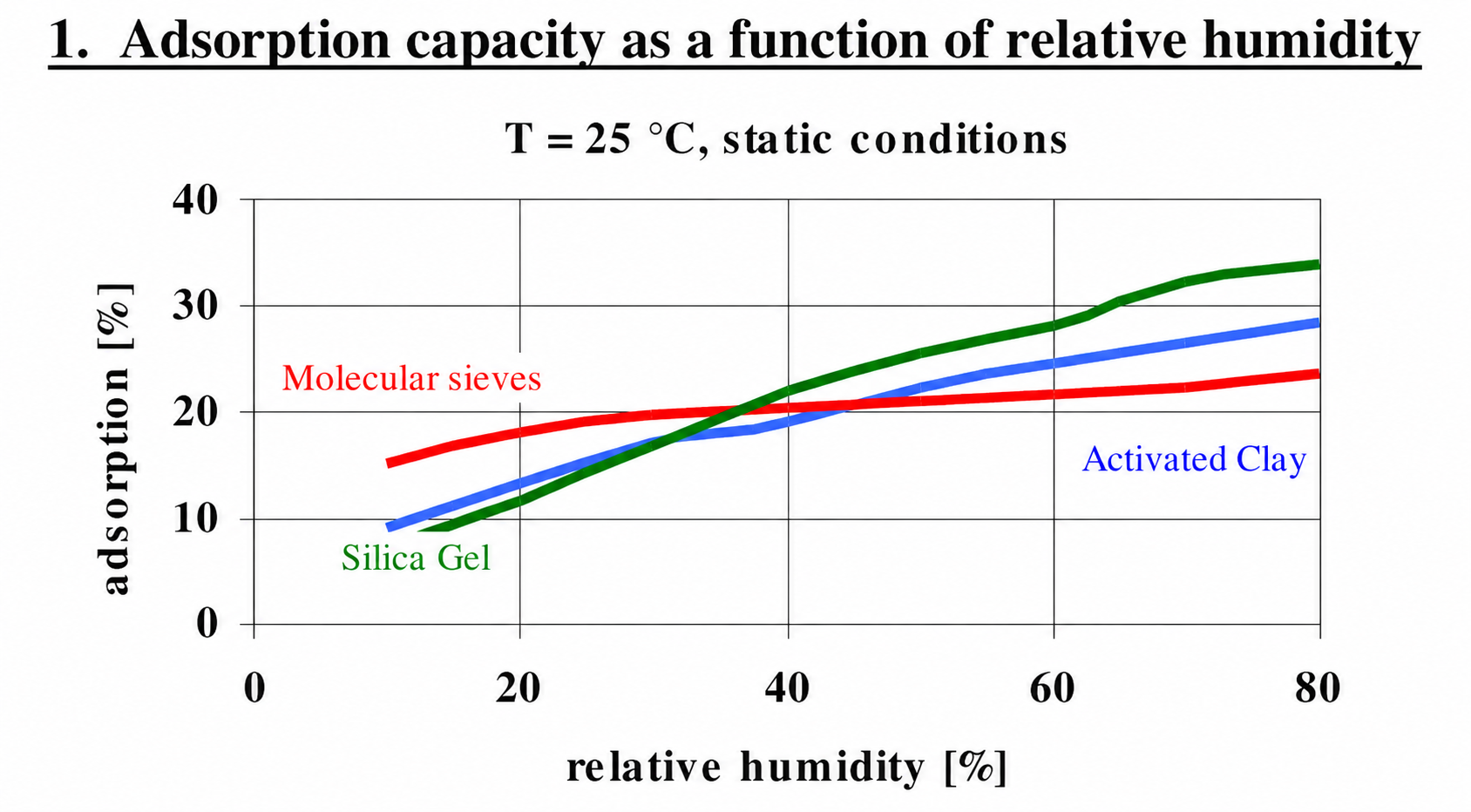
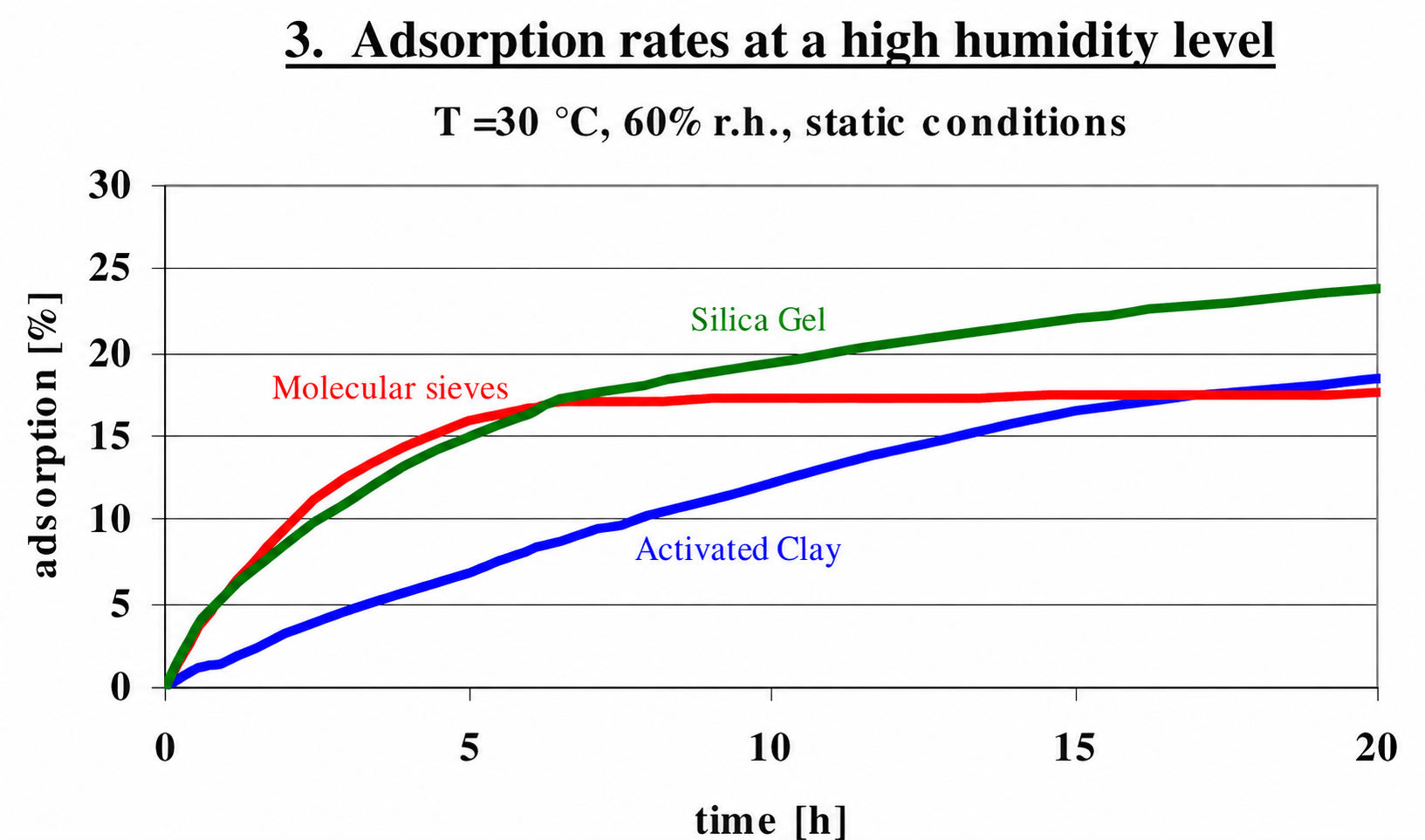
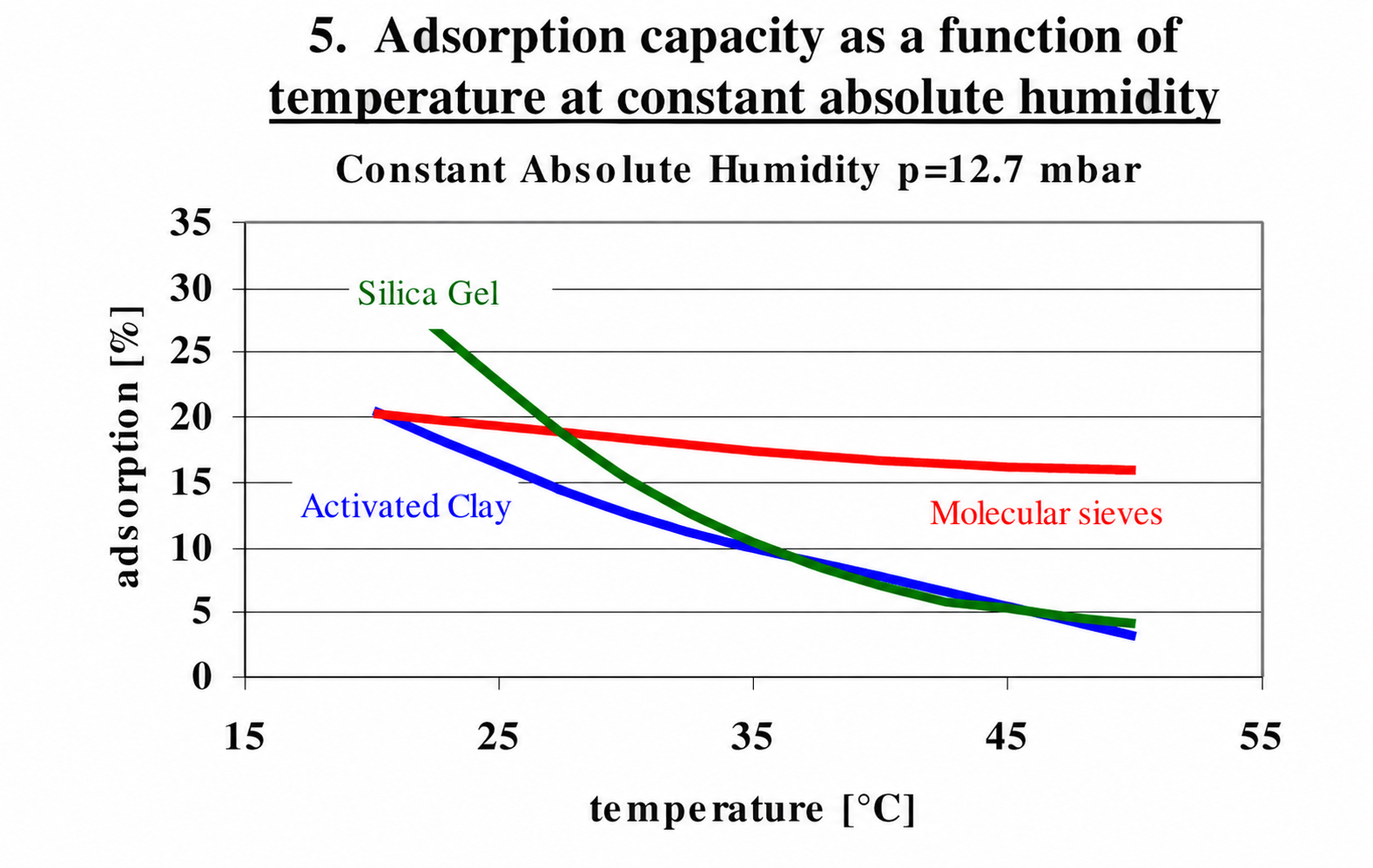
The Activated Clay reference in the supplied performance sheet is a chemically inert, neutral, non-corrosive bentonite clay. Its layered structure binds moisture to internal and external surfaces while remaining dry and free-flowing. Capacity increases with relative humidity; its slower uptake at high humidity than the silica gel and molecular sieve references can make handling less demanding.
Silica gel moisture adsorbents
The Silica Gel reference uses porous, amorphous silicon dioxide. Capacity rises with humidity, and high-humidity uptake is faster than the clay reference. The sheet also describes an indicating version for a visual check of the gel’s saturation state.
Molecular sieve moisture and gas adsorbents
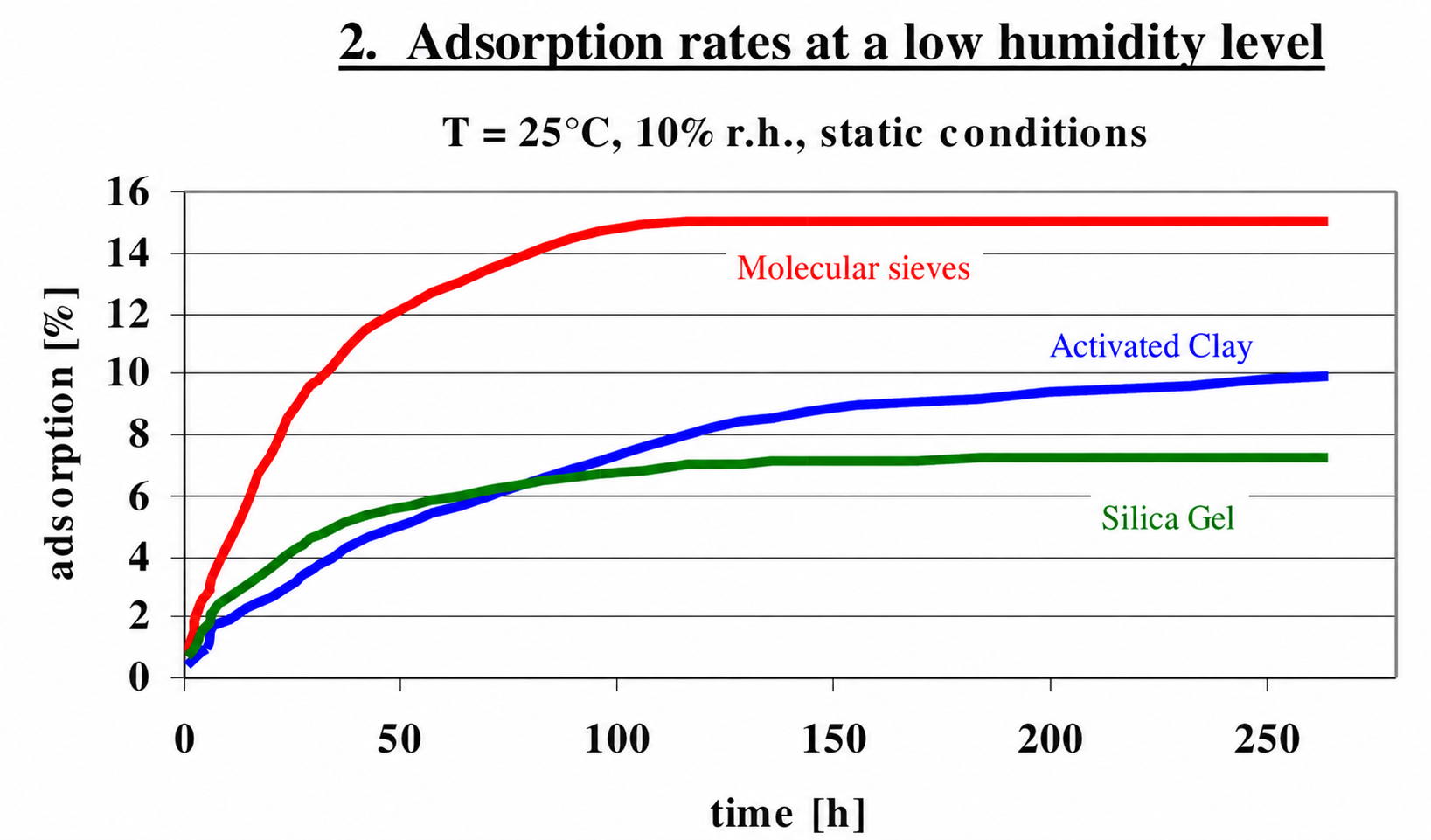
Molecular sieves use synthetic zeolites of types 3A, 4A and 13X. Their uniform pores selectively admit molecules of suitable size. The reference has comparatively strong uptake at low humidity and a high adsorption rate under the low-humidity test conditions. The supplied sheet states that these molecular sieve products cannot be reactivated for repeated use.
Activated carbon gas and odour adsorbents
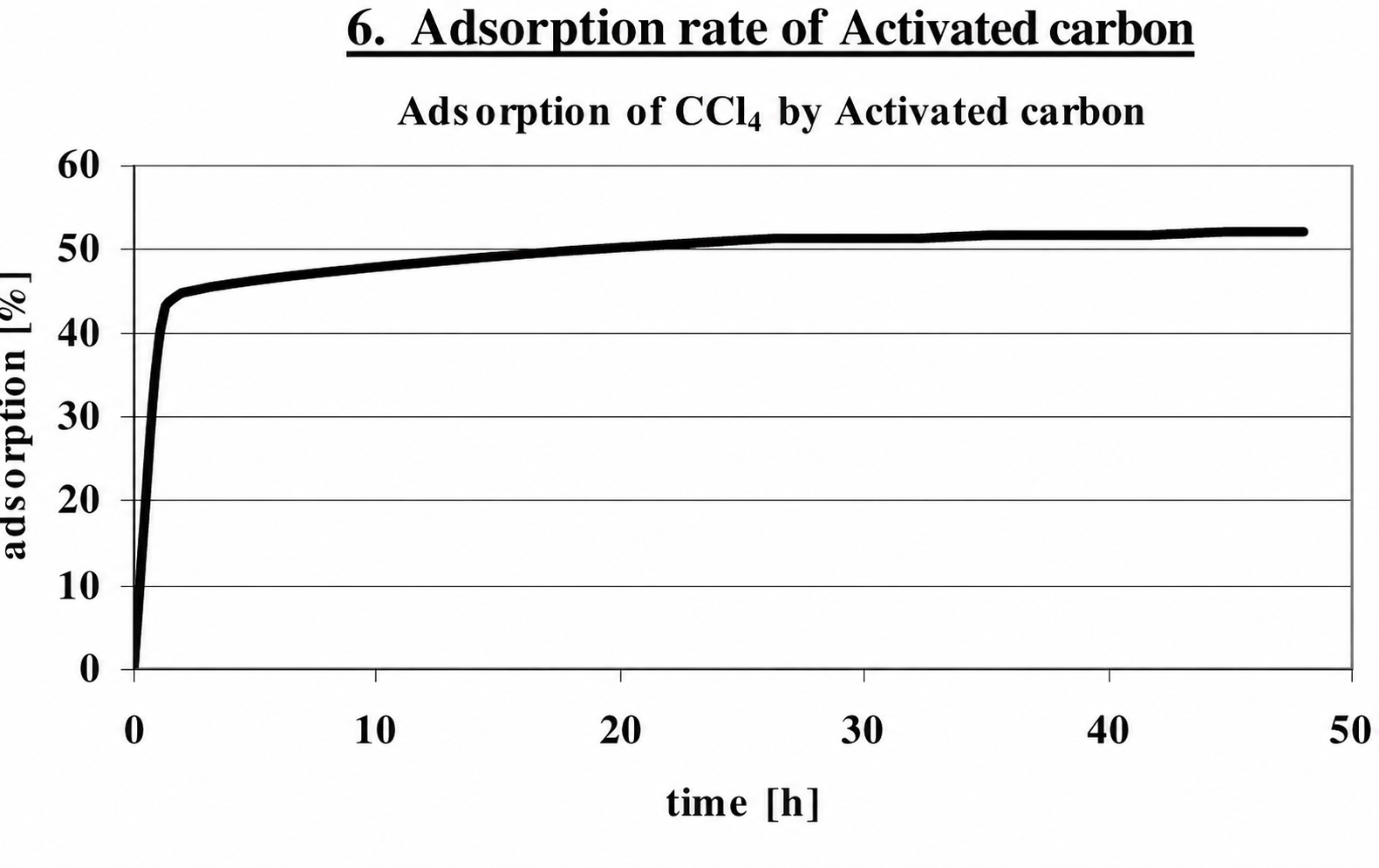
Activated carbon binds suitable gases and volatile organic molecules within packaging. The source describes applications from pharmaceuticals to electronics. The gas adsorption graph below is for carbon tetrachloride at 25°C, rather than a general capacity rating for all contaminants.
Combined moisture, gas and odour control
A combined adsorbent combines activated carbon with either silica gel or bentonite clay in one packaged adsorbent. The desiccant controls water vapour while the carbon addresses suitable gases and odours, including pharmaceutical packaging where both types of protection are needed.
Applications and selection
Typical uses include protective packaging for electronics, optical components, pharmaceutical products and other moisture-sensitive goods. Where cleanliness is critical, discuss our Ultra Clean Desiccant Bags. Match any bag or refill to the application instead of selecting by the material name alone.
Desiccant performance graphs
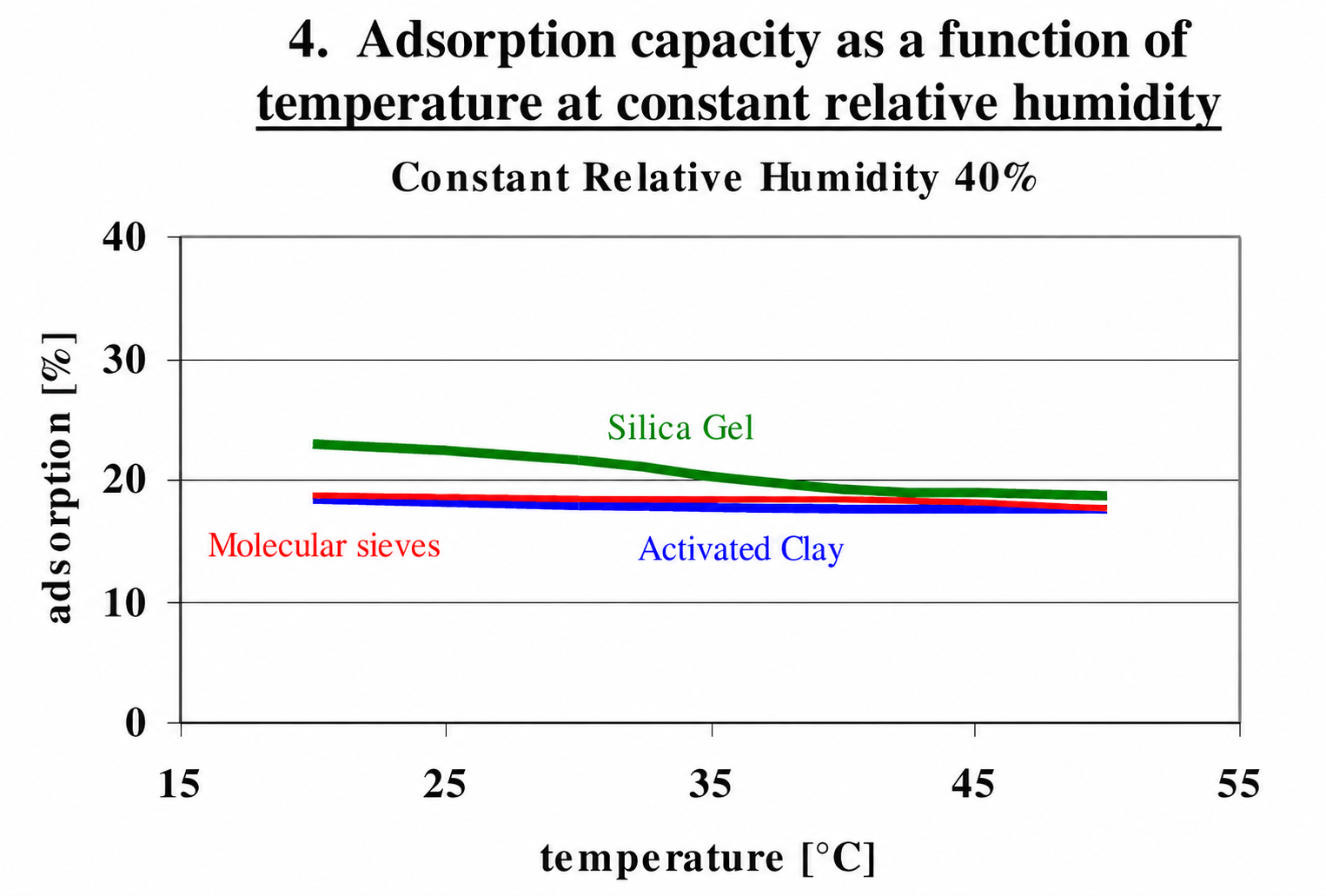
These graphs compare activated clay, silica gel, molecular sieves and activated carbon under the conditions shown. Performance varies by grade, application and test conditions. Click a graph to view its full-size image.